
Capital Gains Selling a Rental in California: What You Will Actually Owe (2026)
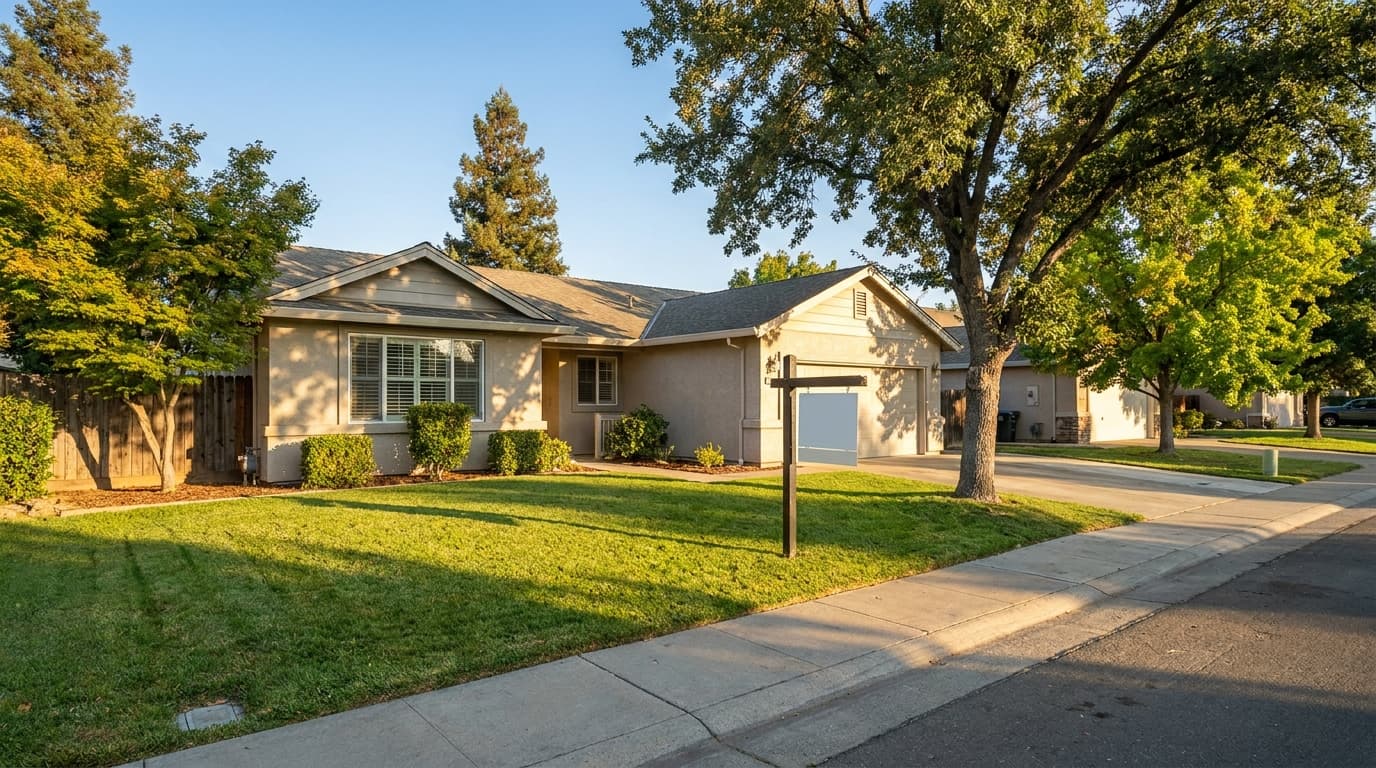
If you own a rental in Elk Grove and you're thinking about selling, the first question is almost always the same. What will I actually owe? As of October 2026, most California rental owners face three separate tax hits on a sale: federal capital gains of 15 to 20 percent, California state tax of up to 13.3 percent, and depreciation recapture taxed up to 25 percent federally. For a lot of long term owners, the combined bill lands somewhere around 25 to 35 percent of the gain. That's a wide range, so let's break down the real math.
I'm Scott Sweeney with M&M Real Estate here in Elk Grove. I help a lot of investors sell, and the surprises almost always come from the tax side, not the sale itself. Let me walk you through it.
How much capital gains will I pay selling a rental in California?
As of October 2026, you'll pay federal capital gains plus California state income tax on your profit, and California has no reduced rate for capital gains. That last part catches people off guard. On your federal return, long term gains are taxed at 0, 15, or 20 percent depending on income, and most rental sellers land at 15 or 20 percent. California then taxes the same gain as ordinary income, which can run up to 13.3 percent at the top.
So the stacked rate on the appreciation alone can be roughly 18 to 33 percent before you even get to depreciation. Your exact number depends on your total income for the year, filing status, and the size of the gain. This is why I tell every investor to loop in a CPA before listing, not after.
What is depreciation recapture and why does it hurt?
Depreciation recapture is the IRS reclaiming the depreciation you deducted while you rented the property, and it's taxed at up to 25 percent federally. Here's the part that stings. It applies whether or not you actually claimed the depreciation. If you owned a rental for 12 years and wrote off a portion of the building value each year, that accumulated amount gets taxed when you sell.
Say you bought an Elk Grove rental years ago and depreciated roughly 100,000 over your hold. That 100,000 can be taxed at up to 25 percent federally, which is 25,000 right there, separate from your capital gain. California taxes recapture too, as ordinary income. For long term owners this is frequently the biggest single line on the tax bill, so don't skip it in your planning.
What does the math actually look like on a real Elk Grove sale?
Let's use round numbers tied to today's market. Median sale prices in Elk Grove are running about 594,000 to 637,000 as of mid to late 2026, with some monthly closes near 686,000. Say you sell a rental for 620,000 that you bought years back for 350,000, and you've taken about 90,000 in depreciation.
Your adjusted basis drops to roughly 260,000 after depreciation, so your total taxable gain is about 360,000. Of that, 90,000 is recapture and 270,000 is capital gain. Rough federal picture: 90,000 recapture at up to 25 percent, plus 270,000 gain at 15 to 20 percent. Then California taxes the full 360,000 as income. Add it up and a bill in the 90,000 to 120,000 range is realistic. That's not a quote, it's an illustration, and your real number depends entirely on your income and basis. But it shows why the net is so different from the sale price.
Can a 1031 exchange help me avoid the tax?
Yes, a 1031 exchange lets you defer federal and California capital gains plus depreciation recapture by rolling the proceeds into another investment property. This is the single most powerful tool most of my investor clients use. You defer, you don't erase, but deferring can mean keeping that 90,000 to 120,000 working for you instead of writing a check.
The rules are strict. You have 45 days from closing to identify a replacement property and 180 days to close on it. You need a qualified intermediary to hold the funds, and you can't touch the money in between. California also has a clawback rule, so even if you exchange into a property in another state, California keeps tracking the deferred gain and expects its share when you eventually cash out. A lot of Elk Grove investors exchange into something with better cash flow, sometimes a newer build or a property in a lower priced area like Rancho Cordova, where medians run about 547,000, or Anatolia at about 629,000.
Does the primary residence exclusion ever apply to a rental?
Not directly, but there's a path. The Section 121 exclusion wipes out 250,000 of gain if you're single, or 500,000 if you're married filing jointly, as long as you lived in the home as your primary residence for 2 of the last 5 years. A pure rental doesn't qualify. But some owners move back into a former rental to claim part of the exclusion before selling.
Two big catches. First, depreciation recapture still applies no matter what, so you can't exclude that. Second, the exclusion gets prorated for the time it was a rental versus a residence after 2009. This is genuinely complex and the numbers can swing a lot, so this is another one for your CPA, not a DIY call.
When is the best time to sell a rental in Elk Grove right now?
The strongest selling window in Elk Grove is April to June, with September to October a close second, as of October 2026. Right now we're in a normalizing, balanced market. Not a crash, not a boom. Median days on market are about 42 to 55, up from roughly 21 to 31 a year ago, and we're sitting near 2.2 months of supply with inventory up about 18 percent year over year.
The encouraging part is that well priced homes still close near 100 percent of list, and prices are forecast to move about 2 to 4 percent over the year. For an investor, the tax picture usually drives timing more than the season does. If you're near a bracket threshold or doing a 1031, the calendar year of the sale can matter as much as the month. If you want to think through whether to sell or hold, I've written about that too, and I'm always happy to run the current numbers on your specific property.
What else affects your net as a rental seller?
Beyond taxes, budget for standard selling costs: commissions, title and escrow, county transfer tax, and any repairs flagged in inspection. Tenants add a layer too. If your property is occupied, timing a vacancy, offering a leaseback, or selling to another investor all change your strategy. I've covered selling with tenants in a separate guide because it comes up constantly in Elk Grove.
One more thing. A clean, well presented rental still sells for more, even to investors. Deferred maintenance shows up fast in offers. If you want a realistic value before you make any decisions, I can pull current comps for your exact street and school area, whether you're in Laguna Creek, East Franklin, Stonelake, or anywhere in the Elk Grove Unified School District.
Let's talk through your numbers
Selling a rental is really two decisions at once, the real estate one and the tax one. I'll handle the market side and help you line up the right CPA for the tax side so you see your true net before you commit to anything. No pressure, just straight numbers.
Reach out anytime. Call or text my cell at 707.330.2324, call the office at 916.999.9921, or find me at SweeneySells.com. I'd love to help you figure out the smartest move. Let me know!
Frequently asked questions
As of October 2026, most Elk Grove rental owners pay federal capital gains of 15 to 20 percent, California tax up to 13.3 percent since the state has no special capital gains rate, plus depreciation recapture taxed up to 25 percent federally. Your blended total often lands in the 25 to 35 percent range of your gain, so always confirm with a CPA for your bracket.
Depreciation recapture is the IRS taking back the depreciation you deducted while renting, taxed at up to 25 percent federally as of 2026. It applies whether or not you actually claimed the deductions, so a rental you held for 10 to 15 years in Elk Grove can carry a meaningful recapture bill even before capital gains.
Yes, a 1031 exchange lets you defer federal and California capital gains plus recapture if you reinvest into another investment property, as of 2026. You must identify a replacement within 45 days and close within 180 days, and California's clawback rule means it tracks the deferred gain even if you later buy out of state.
Not directly, because the Section 121 exclusion of 250,000 single or 500,000 married requires living in the home as your primary residence for 2 of the last 5 years. Some Elk Grove owners move back into a former rental to qualify for part of the exclusion, but recapture on prior depreciation still applies, so check with a CPA first.
The strongest selling window in Elk Grove is April to June, with September to October close behind, as of October 2026. Median days on market are running about 42 to 55 and well priced homes still close near 100 percent of list, so timing plus pricing matters more than ever this year.

I help buyers, sellers, and investors across Elk Grove and the greater Sacramento area. Thinking about a move? Let us talk about your goals, no pressure.