
Seller Credit vs Price Reduction in Elk Grove: Which One Helps You More (2026)
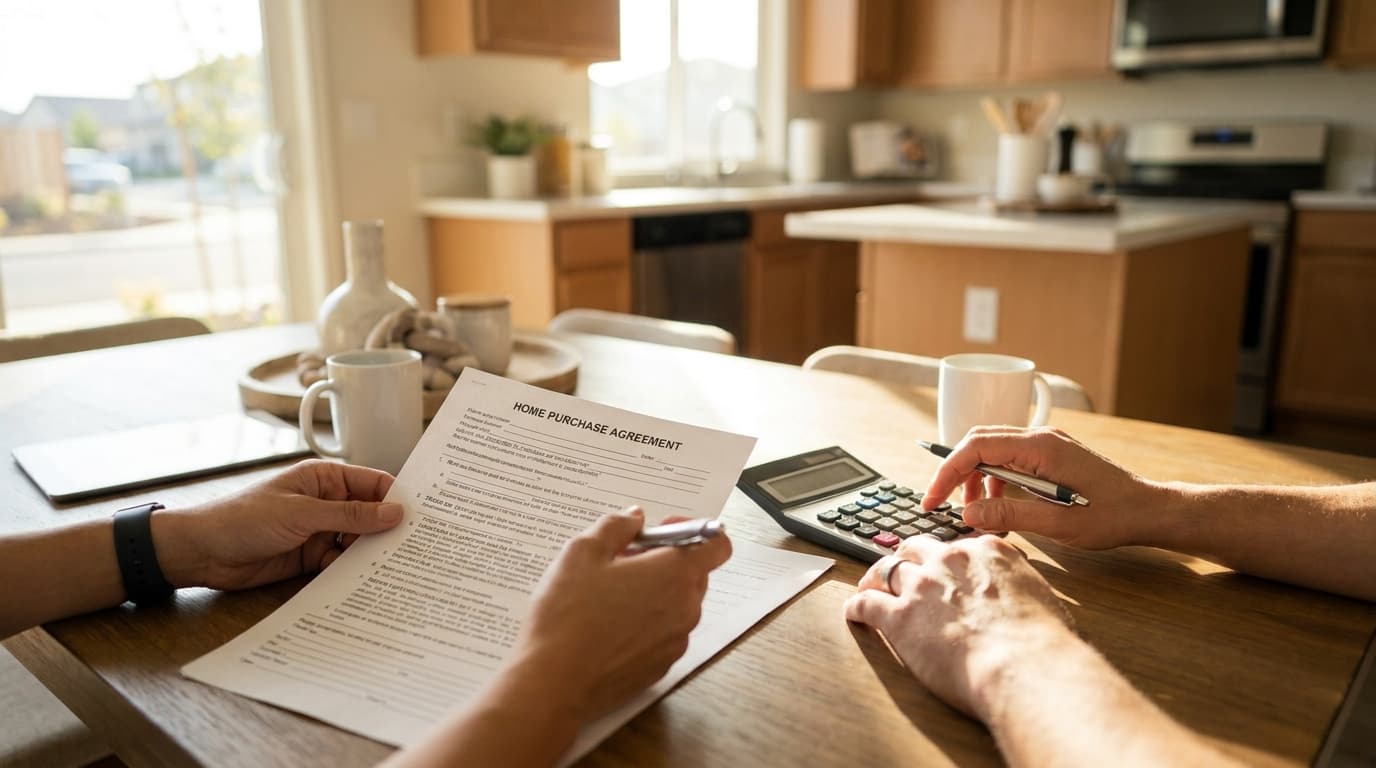
Here's the short answer. As of October 2026, a seller credit usually helps an Elk Grove buyer more than a same size price reduction, because the credit attacks your cash to close and your rate while a price cut barely moves your monthly payment. On a roughly 620,000 home, a 10,000 price reduction saves only about 55 to 65 dollars a month at today's rates. That same 10,000 as a credit can wipe out most of your closing costs or buy your rate down for the first couple years. The right choice depends on what you're short on, cash or comfort with the payment.
Let me walk you through the real math, because this comes up on almost every deal I write right now.
What is the difference between a seller credit and a price reduction?
A seller credit is money the seller agrees to pay toward your closing costs, prepaids, or a rate buydown. A price reduction simply lowers the purchase price. They feel similar, but they hit your wallet in very different spots.
A price reduction lowers the loan amount a little, so it nudges your monthly payment down and shrinks your down payment slightly. A seller credit doesn't change the price at all. Instead it hands you cash at the closing table to cover the costs you'd otherwise pay out of pocket. For most buyers in Elk Grove, cash to close is the bigger hurdle, not the price.
If you want the fuller picture on closing costs, I've written a separate local breakdown on what buyers actually pay at closing here. This piece stays focused on the credit versus price cut decision.
Which one saves a buyer more money in Elk Grove?
A seller credit almost always helps more up front. Here's why, with real numbers.
Say you're buying a 620,000 home, which is right in the middle of the Elk Grove range in fall 2026. Median sale prices have been running about 594,000 to 637,000, with some monthly closes near 686,000.
Option one, a 10,000 price reduction. Your new price is 610,000. With 10 percent down and a 30 year fixed near 7.28 percent, the week of October 1, 2026, that 10,000 lowers your loan by 9,000. Your payment drops roughly 55 to 65 dollars a month. Nice, but small.
Option two, a 10,000 seller credit. You still buy at 620,000, but the seller pays 10,000 toward your closing costs and prepaids. On this price, that often covers most or all of what you'd owe at the table. That's 10,000 you keep in your bank account on closing day.
For a buyer who's cash tight, option two is the clear winner. You feel it immediately. The price reduction takes about 15 years of saved payments to add up to the same 10,000.
When is a price reduction actually the better choice?
A price reduction wins when you plan to stay a long time and you already have plenty of cash. Over 15 to 30 years, a lower loan balance saves more total interest than a one time credit.
It also matters for property taxes. In California, your base tax is tied to the purchase price. Buy at 610,000 instead of 620,000 and your tax bill is slightly lower every single year you own the home. That's real, and it compounds. For a forever home buyer with strong reserves, the price cut quietly pays off.
A price reduction can also reset buyer interest on a home that's been sitting. With Elk Grove days on market running about 42 to 55 in fall 2026, up from roughly 21 to 31 a year earlier, some listings do need a price refresh to show up in new search filters. A credit doesn't change where the home appears in a buyer's price range. A price drop does.
How does a seller credit and a rate buydown work together?
This is where a credit really shines in a 7 percent rate world. You can use a seller credit to fund a rate buydown instead of just paying closing costs.
A temporary 2 to 1 buydown drops your rate by 2 percent the first year and 1 percent the second year, then it settles at the note rate. With the 30 year fixed averaging about 7.28 percent the week of October 1, 2026, that first year relief is significant. Those are national averages for a strong borrower profile, and your own quote depends on credit, down payment, loan type, and the day, so always get a real number from your lender.
You can also buy the rate down permanently with points. For a buyer who's confident they'll keep the loan many years, permanent points funded by a seller credit can beat a price reduction on total savings. I dig deeper into this in my post on seller credits and rate buydowns as a 2026 strategy.
One caution. A buydown only helps if you actually use the credit for it. If the credit is larger than your closing costs and you don't apply the extra to a buydown or prepaids, you can lose it. Size it right with your lender before you write the offer.
What are the seller credit limits by loan type in 2026?
Your loan type caps how big a credit you can take. Going over the cap just wastes money, so this matters.
Conventional loans tie the limit to your down payment. With under 10 percent down, you're capped at 3 percent of the price. From 10 to 25 percent down, it's 6 percent. FHA loans allow up to 6 percent. VA loans allow up to 4 percent in seller concessions, plus the seller can still pay normal closing costs. On an investment property, conventional caps at 2 percent.
On a 620,000 home with a conventional loan and 5 percent down, your max credit is about 18,600. That's usually far more than your actual closing costs, so the real limit is your costs, not the cap.
Does a seller credit hurt the appraisal?
A seller credit does not create an appraisal problem the way a high purchase price can. The agreed price stays the same, so the appraiser is still valuing the home at that number.
This is actually an advantage over paying extra in price. If you offer 10,000 over to cover your own costs, the home has to appraise 10,000 higher. A credit sidesteps that. The home just needs to appraise at the real price. With Elk Grove's balanced market in October 2026, around 2.2 months of supply and well priced homes still closing near 100 percent of list, most deals appraise without drama. If you want to understand low appraisals, I've got a whole post on what happens when your appraisal comes in low.
So which should you ask for in Elk Grove right now?
Start with what's holding you back. Short on cash to close or nervous about the first couple years of payments, ask for a credit. Flush with reserves and planning to stay a decade or more, a price reduction can quietly win over time.
In this market, I lean toward credits for most buyers. Inventory is up about 18 percent year over year, homes are taking longer to sell, and sellers are more open to concessions than they were in 2024. That gives us room to negotiate a credit that solves your actual problem. A credit also keeps the sale price intact for the seller's comps, which sometimes makes them more willing to say yes. Everybody wins.
Every deal is different though. The right play on a Franklin Reserve starter home is different from a Stonelake lakeside property or a cross shop against Anatolia in Rancho Cordova near 629,000. For comparison, Fair Oaks runs about 627,000 and Wilton about 945,000, so the math shifts by area and price point.
Let's run your numbers together
If you're deciding between a credit and a price cut on a specific Elk Grove home, I'm happy to run the real math with you, no pressure. We'll look at your cash, your loan type, your timeline, and what the seller is likely to accept.
Reach out anytime. Call or text my cell at 707.330.2324, the M&M Real Estate office at 916.999.9921, or find me at SweeneySells.com. Thank you so much, and I'm looking forward to helping you make the smart move!
Frequently asked questions
As of October 2026, a seller credit usually helps a buyer more up front because it attacks closing costs and cash to close. A price reduction mostly lowers your monthly payment slightly. On a 620,000 Elk Grove home, a 10,000 credit saves real cash day one, while a 10,000 price cut saves only about 55 to 65 dollars a month at current rates.
There's no state cap, but your loan type sets the limit. For a conventional loan with under 10 percent down in 2026, seller credits are capped at 3 percent of the price. FHA allows up to 6 percent, and VA allows up to 4 percent in concessions plus normal closing costs.
Only if you use it for a rate buydown. A credit applied to a 2 to 1 buydown can drop your effective rate for the first two years. With the 30 year fixed averaging about 7.28 percent the week of October 1, 2026, that temporary relief is worth a lot to Elk Grove buyers.
A credit does not change your purchase price, so it does not create an appraisal gap the way a high offer can. The home still has to appraise at the agreed price. With Elk Grove days on market around 42 to 55 in fall 2026, most well priced homes still appraise near list.
No. A seller credit can only go toward closing costs, prepaid items like taxes and insurance, and rate buydowns. It cannot be applied to your down payment. If your closing costs are smaller than the credit, the extra is usually lost, so sizing it right matters.
In a balanced market like Elk Grove in October 2026, with about 2.2 months of supply, a credit often wins buyers faster because it solves their cash and payment problem directly. A price reduction can still reset buyer interest if the home has been sitting.

I help buyers, sellers, and investors across Elk Grove and the greater Sacramento area. Thinking about a move? Let us talk about your goals, no pressure.