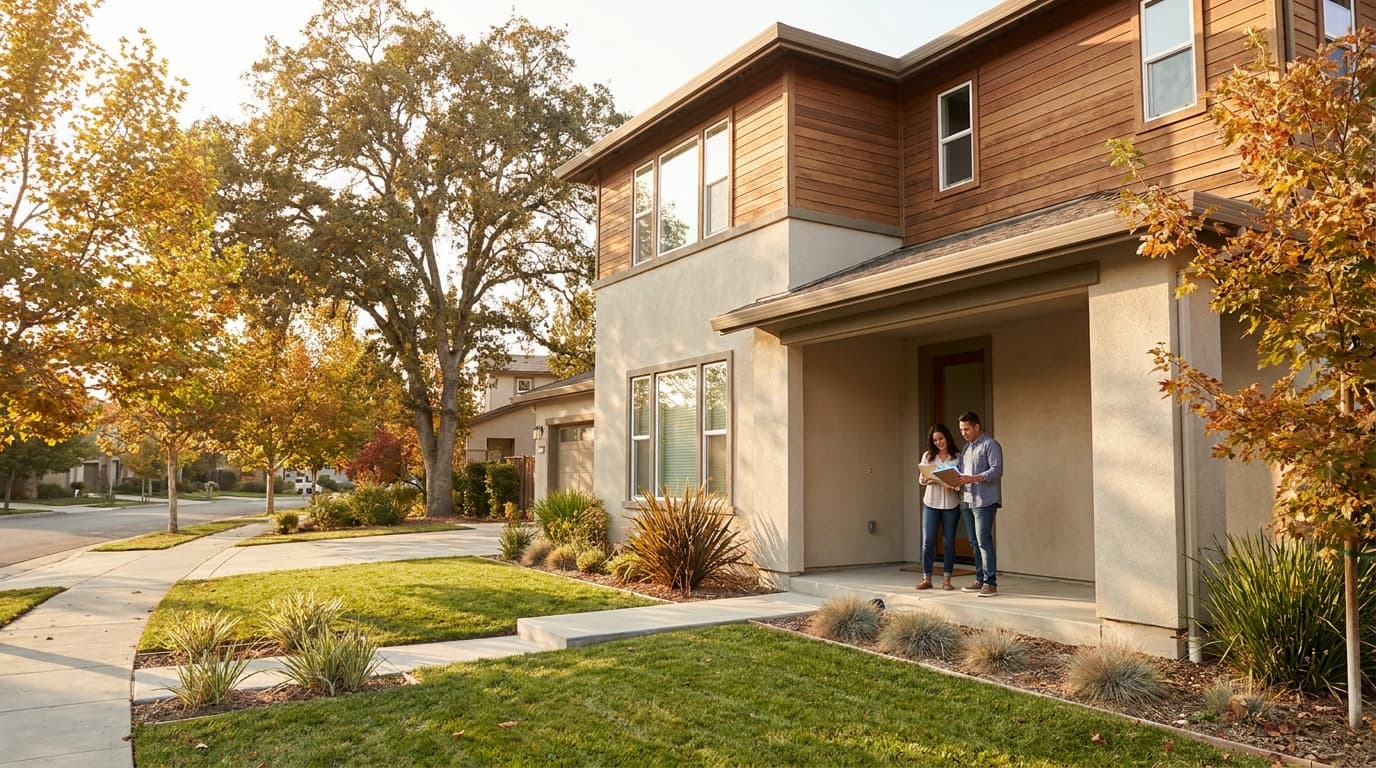

What Is an HOA and What Does It Cover? An Elk Grove Buyer's Guide (2026)
An HOA, or homeowners association, is a nonprofit organization that governs a community and collects dues to maintain shared areas and enforce rules. What it covers depends on the type of community. As of October 2026, a typical Elk Grove single family HOA charges roughly 60 to 180 dollars a month and mostly pays for common area landscaping, amenities, insurance on shared property, management, and reserves. Condos and some townhomes cover a lot more, like roofs and exterior paint, and they usually cost more too.
I'm Scott Sweeney with M&M Real Estate here in Elk Grove. I've walked a lot of buyers through HOA documents, and the dues number is almost never the part that bites people. It's what the HOA isn't funding that matters. Let me break it all down.
What is an HOA and what does it cover in Elk Grove?
An HOA covers the shared stuff that no single homeowner owns alone. In most Elk Grove neighborhoods that means the entry landscaping, the greenbelts, the walking paths, street lighting in private areas, and amenities like pools, clubhouses, and parks. The HOA also carries insurance on those common areas, pays a management company, and sets money aside in reserves for big future repairs.
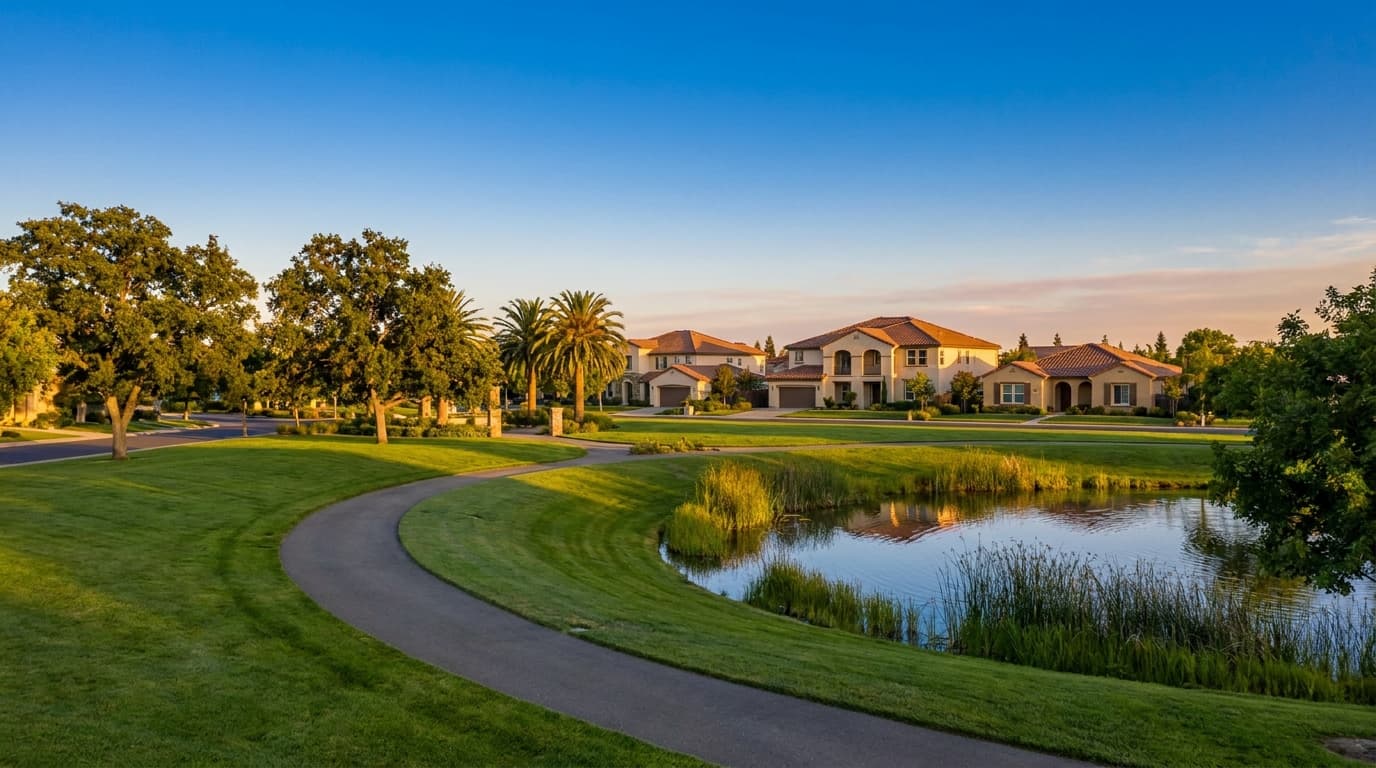
In gated or lakeside communities like Stonelake or Laguna West, dues run higher because there's more to maintain. Think lakes, fountains, gates, and more green space. In a standard subdivision with just entry landscaping and a small park, dues are lighter.
Condos and attached homes are a different animal. There the HOA often covers roofs, exterior walls and paint, exterior insurance, and sometimes water, sewer, or trash. That's why a condo HOA can look expensive until you realize it's handling repairs you'd otherwise pay for yourself.
What does an HOA not cover?
An HOA almost never covers the inside of your home, your own roof on a single family house, your yard behind the fence, or your personal insurance. That's on you.
Here's where buyers get surprised. On a single family home, the HOA maintains the greenbelt, but your roof, your HVAC, your water heater, your fence, and your private landscaping are yours. The dues don't touch any of it. People sometimes assume the HOA is like a warranty. It isn't.
The other big one is special assessments. If the HOA runs short on reserves for a major repair, it can charge every owner a one time assessment on top of regular dues. That's the real risk, and it's exactly why reading the documents matters.
What HOA documents should I read first, and in what order?
Read the reserve study and the meeting minutes first, then the budget, then the CC&Rs, then the resale disclosure package. Most buyers read these in the wrong order and focus on the rules. The money documents tell you far more.
Here's my order and why:
First, the reserve study. This tells you how well funded the HOA is for future big ticket repairs. A reserve that's 70 percent funded or better is healthy. Under 30 percent and I start asking hard questions, because a special assessment gets more likely.
Second, the last 12 months of meeting minutes. This is where the truth lives. Pending lawsuits, roof problems, pool rebuilds, dues increases being discussed. All of it shows up in minutes before it shows up anywhere else.
Third, the current budget. Confirm the actual monthly dues and what they're spent on. Watch for a budget that doesn't fund reserves adequately.
Fourth, the CC&Rs, the covenants, conditions, and restrictions. These are the rules. Pets, rentals, RV parking, paint colors, fences, solar. If you've got an RV or you're planning to rent the place out, read this closely.
Fifth, the full resale disclosure package your escrow provides. In California you have a review period during escrow to go through all of it. Use it. If something looks off, we can act on it.
How much are HOA dues in Elk Grove and nearby communities?
As of October 2026, most single family HOAs in Elk Grove run about 60 to 180 dollars a month, and amenity rich or gated communities often run about 200 to 450 dollars or more. Condos vary widely depending on what's bundled in.
For context, Elk Grove's median sale price sits at about 594,000 to 637,000 as of mid to late 2026, with some monthly closes near 686,000. Homes are taking roughly 42 to 55 days to sell, up from about 21 to 31 a year earlier, with around 2.2 months of supply. That's a normalizing, balanced market, not a crash and not a boom. Well priced homes still close near 100 percent of list.
When buyers cross shop nearby areas, the HOA picture shifts too. Anatolia in Rancho Cordova, where medians run about 629,000, is a master planned community with amenities and dues to match. Fair Oaks sits near 627,000 and has fewer HOA neighborhoods overall. Wilton, around 945,000, is mostly acreage and country living with little HOA presence. Rancho Cordova broadly runs near 547,000. If you want the full rundown on HOA neighborhoods specifically, my guide on Elk Grove HOA communities goes deeper on who's who.
How do HOA dues affect what I can afford?
HOA dues get added straight into your monthly housing payment when a lender figures what you qualify for, so higher dues shrink your buying power. This is the part first time buyers miss most.
With the 30 year fixed averaging 7.40 percent for the week of October 8, 2026, up 0.12 points from the prior week, and the 15 year at 6.73 percent, every monthly dollar counts. Those are national averages from Freddie Mac via FRED for a strong borrower profile, not a personal quote. Your rate depends on your credit, down payment, loan type, and the day you lock. Over the trailing year the 30 year has ranged from about 5.98 to 7.40 percent, so timing moves the math.
Here's the practical takeaway. If you qualify at the edge of your budget, 300 dollars a month in dues can knock a real chunk off your maximum loan amount. Tell your lender the exact dues figure early so your pre approval is honest. If you want to see what your budget actually buys right now, my affordability write up is a good next read.
Are HOA communities worth it in Elk Grove?
For a lot of buyers, yes, because the dues buy consistency. Well run HOA neighborhoods tend to hold their look, protect curb appeal across the street, and keep amenities nice. That can support resale value over time.
But it's a personal fit question. If you want freedom to park an RV in the driveway, build whatever you like, or skip the rules entirely, an HOA might frustrate you. If you value a maintained, cohesive neighborhood with a pool and parks you don't have to care for yourself, it's often a great trade. The key is buying into a financially healthy HOA, which goes back to that reserve study and those minutes.
Elk Grove is served by the Elk Grove Unified School District, and many of the most popular family neighborhoods happen to be HOA communities. That's not a coincidence. Shared amenities and tidy common areas are part of what makes them desirable.
Let's talk through it
HOA documents can feel like a lot. That's genuinely part of what I do for buyers, I read through the reserve study and minutes with you and flag anything that gives me pause before you're locked in. No pressure, just a clear picture.
If you're weighing an HOA home in Elk Grove, reach out and let's talk. You can get me on my cell at 707.330.2324, the M&M Real Estate office at 916.999.9921, or at SweeneySells.com. Thank you so much, and I'm looking forward to helping!
Frequently asked questions
As of October 2026, most Elk Grove HOAs use your dues for common area landscaping, exterior lighting, shared amenities like pools and clubhouses, management fees, insurance on common property, and reserve funding for big future repairs. In condos and some townhomes the HOA may also cover roofs, exterior paint, and sometimes water or trash.
As of October 2026, most single family HOAs in Elk Grove run roughly 60 to 180 dollars a month, while gated or lakeside communities and condos with more shared amenities can run about 200 to 450 dollars or more. Always confirm the exact figure in the current budget, since dues change year to year.
Read the CC&Rs, the current budget, the reserve study, the last 12 months of meeting minutes, and the resale disclosure package first. The reserve study and minutes tell you whether a special assessment is coming, which matters more than the monthly dues number.
Yes. If reserves fall short for a major repair like roofs, roads, or a pool rebuild, the HOA can levy a one time special assessment, sometimes a few hundred dollars and sometimes several thousand. A well funded reserve study, ideally near 70 percent funded or better, lowers that risk.
Yes. Lenders add your monthly HOA dues to your housing payment when figuring your debt to income ratio, so higher dues reduce how much home you qualify for. With the 30 year fixed at 7.40 percent for the week of October 8, 2026, that math matters, so get pre approved with your real dues number in the file.

I help buyers, sellers, and investors across Elk Grove and the greater Sacramento area. Thinking about a move? Let us talk about your goals, no pressure.