
Request for Repairs After Inspection in Elk Grove: How to Ask Without Blowing Up the Deal (2026 Buyer's Guide)
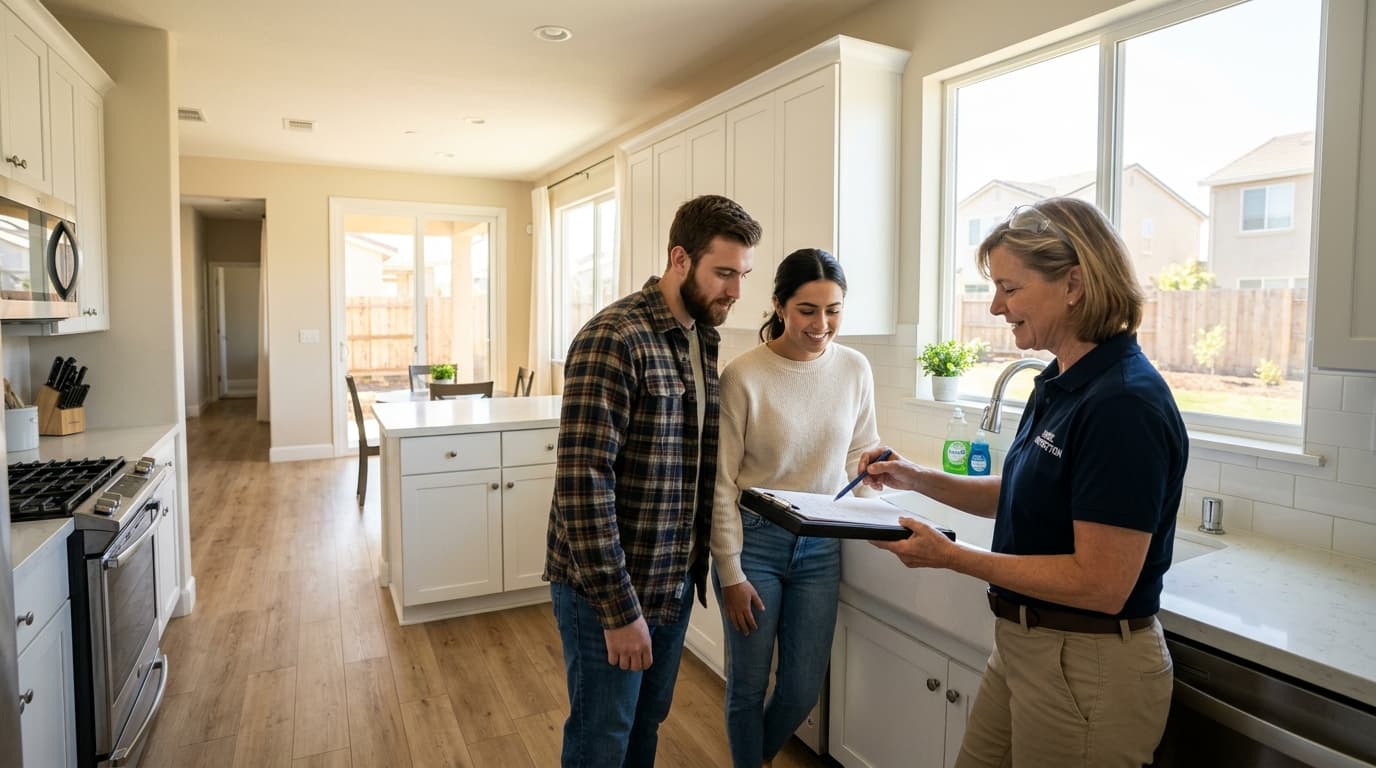
As of November 2026, the smart way to handle a request for repairs after inspection in Elk Grove is to ask for a short list of real, dollar backed items, and to lean toward a credit instead of making the seller fix things. In today's more balanced market, with median days on market around 42 to 55 and roughly 2.2 months of supply, sellers have more room to say no than they did a year ago. So the buyers who win are the ones who ask for what actually matters, not everything the report flags.
Let me walk you through how this works in California, what the form is, and how to negotiate without torpedoing a deal you really want.
What is a request for repairs after a home inspection?
In California, a request for repairs is a written document you submit during your inspection contingency asking the seller to fix items or give you a credit. The form most agents use is the C.A.R. Request for Repairs, often called the RR form. It's not part of your original offer. It comes after you've done your inspections and reviewed the reports.
Here's the key thing. The seller is not required to agree to any of it. The request opens a negotiation. They can accept, reject, or counter. If you can't reach terms, your inspection contingency is what protects your deposit. More on that below.
If you want the full picture on how the contingency period works, I've written a separate guide on the 17 day clock in California. This all happens inside that window.
When do you submit the request for repairs in Elk Grove?
You submit it during your inspection contingency, which in a standard California contract defaults to 17 days but is often negotiated shorter. The sequence is simple. You go into contract, you order your inspections fast, you review the reports, then you decide what to ask for.
Timing matters here. In Elk Grove right now, well priced homes still close near 100 percent of list, and good listings still move. If you drag your feet getting inspections ordered, you lose leverage and you risk running past your contingency. I tell my buyers to book the general inspection within the first few days of acceptance. That leaves time to bring in a roofer, a plumber, or a pest company if something looks off.
What should you actually ask the seller to repair?
Ask for health, safety, and big ticket items, not cosmetic ones. The fastest way to annoy a seller and lose goodwill is to hand over a list of 30 nitpicks from the inspection report. That report is meant to be thorough. It is not a punch list for the seller.
Here's how I sort it with my buyers:
Ask for these. Active roof leaks, failing water heaters, electrical hazards like open junction boxes or double tapped breakers, major plumbing leaks, failed furnace or AC, foundation movement, and anything that makes the home unsafe or uninsurable.
Think twice on these. Older but functioning systems, minor settling cracks, worn but working appliances. These are part of buying a resale home.
Usually let it go. Loose outlet covers, a dripping hose bib, paint, caulking, a sticky door. If you ask for everything, the seller stops taking you seriously on the things that count.
In a normalizing market like ours, where inventory is up about 18 percent year over year, you have a little more negotiating room than buyers had in 2024. But that only works if your ask is reasonable and backed by evidence.
Should you ask for repairs or a credit instead?
In most cases I steer Elk Grove buyers toward a credit instead of repairs. A credit is cleaner for everyone. You control the quality of the work, you pick the contractor, and you do it on your timeline after you own the home.
Think about it. If you ask a seller who's already moved out to fix a roof, they'll hire the cheapest bid and want it done fast. You inherit that work with no say. A credit toward closing costs lets you lower your out of pocket cash and handle the repair the way you want.
There are limits. Your lender caps how much credit you can take, and the credit can't exceed your actual closing costs on most loan types. If the repair is bigger than that, you may need a price reduction or an actual repair. I've got a full breakdown in my seller credit vs price reduction guide, and the same logic helps buyers decide which to request.
One exception. If the home won't fund or insure without a repair done first, like an active roof leak or a broken furnace on an FHA or VA loan, the seller may need to fix it before closing. We sort that out with your lender early.
How do you ask for repairs without killing the deal?
Keep the list short, attach the evidence, and let your agent frame it as a partnership, not a demand. Tone is everything here. A seller who feels attacked digs in. A seller who feels like you're a serious buyer solving a real problem usually works with you.
Here's what works in Elk Grove right now:
Lead with the big items only. Three to five real things beats a list of twenty.
Back it with numbers. A bid from a licensed contractor or a line from the inspection report carries weight. Vague asks get rejected.
Ask for a credit when you can. It's easier to say yes to money than to a repair obligation.
Stay calm on the small stuff. You just negotiated a price. Don't reopen the whole thing over a $90 fix.
Remember the market context. With days on market in the 40s to low 50s, sellers aren't desperate, but they also don't want to go back on the market and start over. A fair request often lands.
What happens if the seller says no?
If the seller rejects your request and you're still inside your inspection contingency, you have three choices. You can accept the home as is and move forward, you can counter and keep negotiating, or you can cancel and get your earnest money deposit back.
That last part is why the contingency matters so much. As long as you're acting in good faith within the contingency window, your deposit is protected if you walk. In Elk Grove, earnest money typically runs about 1 to 3 percent of the price, so on a $600,000 home that's roughly $6,000 to $18,000. You do not want to risk it by blowing past your contingency dates. I keep my buyers on a tight calendar so that never happens.
Most of the time, though, it doesn't come to a walk. A reasonable request and a seller who doesn't want to relist usually meet somewhere in the middle.
How does the current Elk Grove market affect repair negotiations?
Today's balanced market gives buyers more leverage than the frenzy of a couple years ago, but not unlimited leverage. As of November 2026, the Elk Grove median sale price runs about 594,000 to 637,000, with some monthly closes near 686,000. Inventory is up, days on market have stretched to roughly 42 to 55, and prices are forecast to move about 2 to 4 percent over the year.
What that means for you. On a home that's been sitting, a fair repair request often gets a yes, because the seller doesn't want to go back on the market. On a fresh, well priced listing that's drawing interest, you have less room, so you save your asks for what truly matters.
For context, nearby medians run about 627,000 in Fair Oaks, 547,000 in Rancho Cordova, and around 945,000 in Wilton, where larger lots and septic systems add inspection items worth watching. If you're buying near Wilton or Sheldon, budget time for a septic and well inspection before you finalize your list.
And remember rates. The 30 year fixed averaged 7.11 percent the week of November 12, 2026, per Freddie Mac via FRED, down 0.07 from the prior week, with the 15 year at 6.45 percent. Those are national averages for a strong borrower, not your personal quote. Your rate depends on credit, down payment, loan type, and the day. A closing cost credit from repairs can actually help you buy down that rate, which is one more reason I like credits.
Talk to a local Elk Grove agent before you send your request
A good repair negotiation is part strategy, part timing, and part knowing this market. I've handled hundreds of these in Elk Grove and the greater Sacramento area, and I'm happy to walk you through yours with zero pressure.
Reach out anytime. Call the office at 916.999.9921 or my cell at 707.330.2324, or find me at SweeneySells.com. Let me know how I can help.
Scott Sweeney, M&M Real Estate, 9468 Laguna Creek Dr, Elk Grove, CA 95624. DRE 01938720.
Frequently asked questions
Yes. As of November 2026, a California seller can accept, reject, or counter any request for repairs. If you can't agree and you're still inside your inspection contingency, you can cancel and get your earnest money back, which is typically about 1 to 3 percent of the price in Elk Grove.
In most Elk Grove deals a credit is better. You control who does the work and when, and a closing cost credit lowers your out of pocket cash. The main limits are your lender's cap and the fact that the credit usually can't exceed your actual closing costs.
The RR form is the C.A.R. Request for Repairs, the standard document buyers use to ask a seller for repairs or a credit during the inspection contingency. It's separate from your original offer and opens a negotiation the seller can accept, reject, or counter.
You request repairs during your inspection contingency, which defaults to 17 days in a standard California contract but is often negotiated shorter. Order inspections in the first few days after acceptance so you have time to get bids and submit your request before the window closes.
Skip cosmetic and minor items like loose outlet covers, caulking, paint, and a dripping hose bib. In Elk Grove's balanced November 2026 market, focus your request on health, safety, and big ticket items like roof leaks, failing water heaters, electrical hazards, and HVAC so the seller takes your ask seriously.

I help buyers, sellers, and investors across Elk Grove and the greater Sacramento area. Thinking about a move? Let us talk about your goals, no pressure.