
How to Read a Preliminary Title Report in Elk Grove Without a Law Degree (2026 Buyer's Guide)
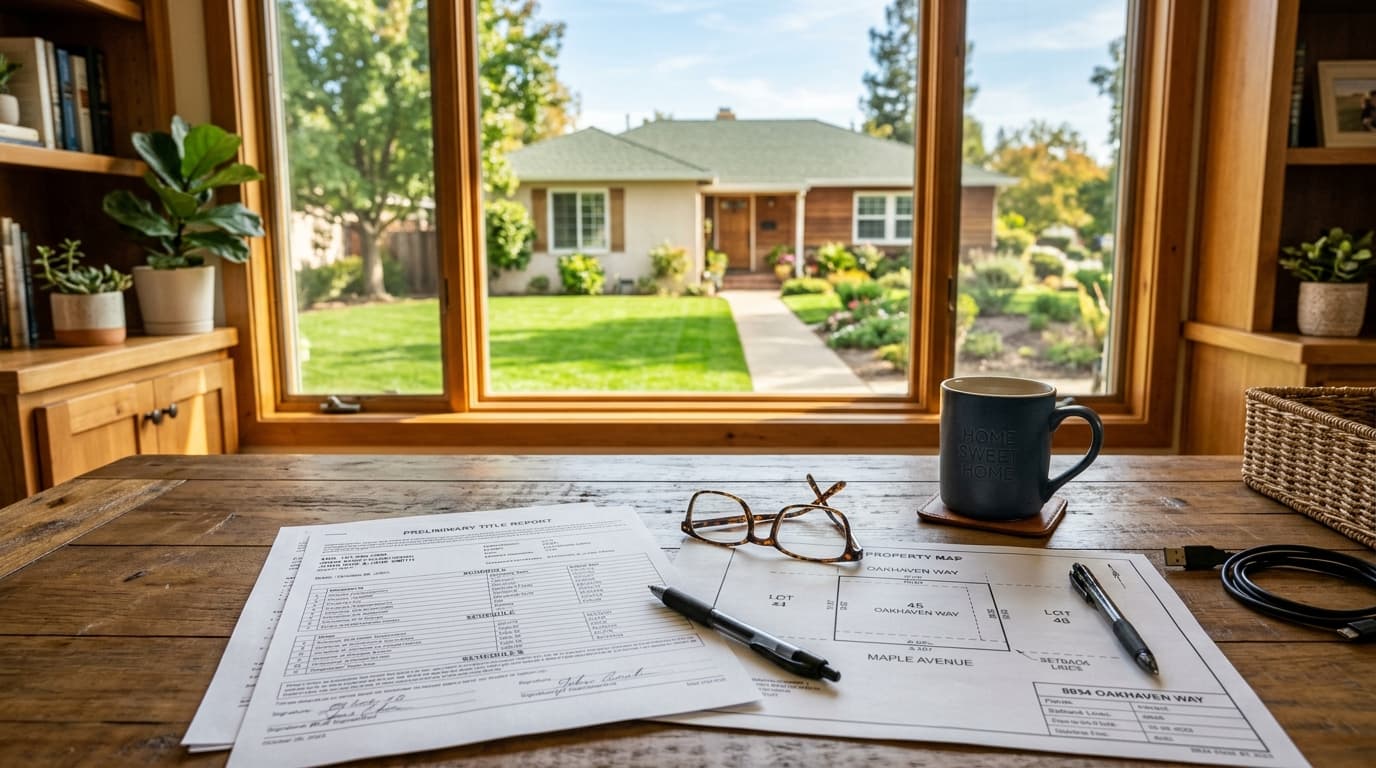
Hi there! If you just got a preliminary title report in your inbox and your eyes glazed over, you're not alone. Here's the short version. As of November 2026, nearly every Elk Grove buyer gets a prelim within about 2 to 5 business days of opening escrow, and the vast majority of what's inside is routine. The part you actually need to read is Schedule B, the list of exceptions, and I'll show you how to do that without a law degree.
With the median Elk Grove sale price running about 594,000 to 637,000 right now, and some monthly closes near 686,000, this is a big purchase. Reading the prelim carefully is one of the easiest ways to protect it. Let me walk you through it.
What is a preliminary title report and why do I get one?
A preliminary title report is the title company's early snapshot of who owns the property and what's recorded against it. It's an offer to issue title insurance under certain conditions, not the insurance policy itself. You get it near the start of escrow so you can review everything during your contingency period.
Think of it as a background check on the house instead of the seller. It confirms the legal owner, the legal description of the lot, and anything attached to the title like loans, liens, easements and recorded restrictions. In Elk Grove your title company usually orders it the day escrow opens, and it lands within a few days.
If you want the bigger picture on who handles what, I've written separately about what a title company actually does and the difference between title and escrow. This piece zeroes in on reading the document itself.
How is a preliminary title report organized?
Most prelims follow the same layout, so once you know the sections you can read any of them. There are usually four parts, and the one that matters most is Schedule B.
Here's the structure you'll see on a typical Elk Grove report in 2026.
The top summary names the title company, the escrow number, the property address and the effective date. Always check the address and the date first.
Schedule A tells you the type of policy being offered, the current owner of record, and how title is held. This is where you confirm the seller is actually the legal owner.
The legal description spells out the lot and the recorded map. It won't read like English, and that's normal. You're just confirming it matches the home you're buying.
Schedule B is the heart of it. This is the list of exceptions, meaning things the title policy will not cover. That's what we're going to decode next.
What are Schedule B exceptions and which ones matter?
Schedule B lists everything recorded against the property that title insurance excludes from coverage. On a typical Elk Grove prelim you'll see roughly 8 to 15 exceptions, and most are completely routine. The skill is telling the ordinary ones from the ones worth a question.
Here's how I sort them when I'm reviewing a report with a buyer.
Property taxes show up as an exception because they're a lien until paid. This is standard on every report. You'll also see any supplemental tax notes here.
CC&Rs, which are covenants, conditions and restrictions, appear as a recorded document, especially in HOA communities like Stonelake, Laguna Ridge and Franklin Reserve. These are the rules of the neighborhood. More on those below.
Easements let someone use part of the land. Most are utility or drainage easements along the edges of the lot. These are normal and rarely affect you.
Liens are debts recorded against the property, like the seller's current mortgage. The seller's loan gets paid off and released at closing, so seeing it is expected.
The ones I slow down for are access easements, shared driveway easements, old liens that should have been cleared, and anything that looks like a dispute. Those deserve a direct question to your title officer.
What do easements on a title report actually mean for me?
An easement gives another party the legal right to use a portion of your property for a specific purpose. In Elk Grove, as of 2026, the big majority are standard utility and drainage easements that you'll never notice. They don't block you from using your yard or home normally.
Where I pay closer attention is on larger lots and rural parcels. In Wilton, where the median is around 945,000, and in parts of Sheldon, you sometimes see access easements or shared roads because properties sit on acreage. If a neighbor has a recorded right to cross your driveway, you want to know that before you fall in love with the place.
A quick way to check this yourself. Read the easement description, then look at the plat map if one is attached. If the easement runs across the back ten feet for a power line, no problem. If it runs right through where you pictured a pool, that's a conversation.
How do I read the CC&Rs referenced in the report?
CC&Rs are the recorded rules that govern an HOA community, and the prelim only references them by document number. To actually read them you request the full recorded CC&Rs plus the current HOA disclosure packet, which you're entitled to during escrow.
In Elk Grove this matters a lot because so many newer neighborhoods have an HOA. The CC&Rs cover things like paint colors, RV and boat parking, fencing, short term rentals and architectural approval. If you plan to park a work truck or build an ADU, read these before you remove contingencies.
I always tell buyers to treat the CC&Rs and the HOA packet as required reading, not fine print. If you want the full breakdown of dues and coverage, I have a separate guide on what an HOA covers in Elk Grove. The prelim just points you to the document, the HOA packet gives you the detail.
What about Mello Roos and special tax liens?
Mello Roos is a special tax district that funds roads, schools and infrastructure, and it shows up on the prelim as a lien or special assessment. It's very common in newer Elk Grove areas like Laguna Ridge, East Franklin and parts of Laguna West. In 2026 it can add roughly 1,500 to 3,500 or more per year on top of your regular property taxes.
This is one of the most overlooked lines on a title report, and it directly changes your monthly payment. A home that looks affordable can carry a meaningfully higher tax bill than an older home across town with no Mello Roos. I've written a full post on Mello Roos in Elk Grove, and I'd read it if your home is in a newer subdivision.
Here's the simple move. When you see a special tax or community facilities district on the prelim, ask your title officer or me for the actual annual amount and how many years are left. Then plug it into your real monthly number.
How does reading the prelim fit into my escrow timeline?
You review the preliminary title report during your contingency period, which in California is often around 17 days unless you negotiate something different. That window is your time to read everything and ask questions without risk. Our current Elk Grove market gives you a little more breathing room than a year ago.
As of November 2026, homes here are taking about 42 to 55 days to sell, up from roughly 21 to 31 days a year earlier, with about 2.2 months of supply. That's a normalizing, balanced market, not a crash and not a boom. Well priced homes still close near 100 percent of list, and prices are forecast to move about 2 to 4 percent over the year. For a deeper read, my latest Elk Grove market update has the full numbers.
Why does the market matter for your prelim? Because a calmer pace means buyers aren't pressured to skip their homework. Use the extra days to actually read Schedule B.
A quick checklist for reading your prelim
Here's the short version I give buyers so they can review a report in about fifteen minutes.
Confirm the property address and effective date at the top. Confirm the owner of record in Schedule A matches the seller. Skim the legal description just to be sure it's the right lot. Then read every Schedule B exception and sort each one as routine or question.
Flag anything that mentions access, shared use, an unpaid lien that isn't the seller's current loan, a lawsuit, or a special tax. Everything else is usually ordinary. When something looks off, tell your agent and title officer early, ideally well inside your contingency window, because most issues clear up routinely before closing.
And remember, the prelim is not your title insurance policy. The actual policy comes after recording, and it's what protects you long term. If you want to understand why you're paying for that coverage, I cover title insurance in detail in a separate post.
Let's read yours together
If you've got a prelim in hand and you're not sure what a line means, send it over. I'll walk through Schedule B with you and tell you plainly what's routine and what's worth a question. No pressure, just a local read on your actual report.
Reach me anytime. Office 916.999.9921, cell 707.330.2324, or SweeneySells.com. I'm at M&M Real Estate here in Elk Grove, and I'd love to help. Let me know!
Frequently asked questions
In most Elk Grove transactions as of November 2026, the prelim arrives within 2 to 5 business days after escrow opens. Your title company pulls it early so you can review exceptions during your contingency period.
Schedule B lists everything title insurance will not cover, like easements, CC&Rs, liens, and property taxes. On a typical Elk Grove prelim in 2026 you'll see 8 to 15 exceptions, and most are routine utility easements and recorded CC&Rs.
No. A prelim is an offer to insure under stated conditions, not the policy itself. You get the actual title insurance policy after closing, usually a few weeks after recording in late 2026.
Usually not. Most Elk Grove easements as of 2026 are standard utility or drainage easements that don't affect how you use the home. The ones to flag are access or shared driveway easements, which are more common in Wilton and Sheldon on larger lots.
It's a special tax district lien, common in newer Elk Grove areas like Laguna Ridge and East Franklin. In 2026 Mello Roos can add roughly 1,500 to 3,500 or more per year to your tax bill, so read that exception closely before you remove contingencies.
Tell your agent and title officer right away, ideally within your 17 day contingency window. Many items like an old paid off loan or a stale lien can be cleared before closing, and in 2026 title companies resolve most of these routinely.
I help buyers, sellers, and investors across Elk Grove and the greater Sacramento area. Thinking about a move? Let us talk about your goals, no pressure.